
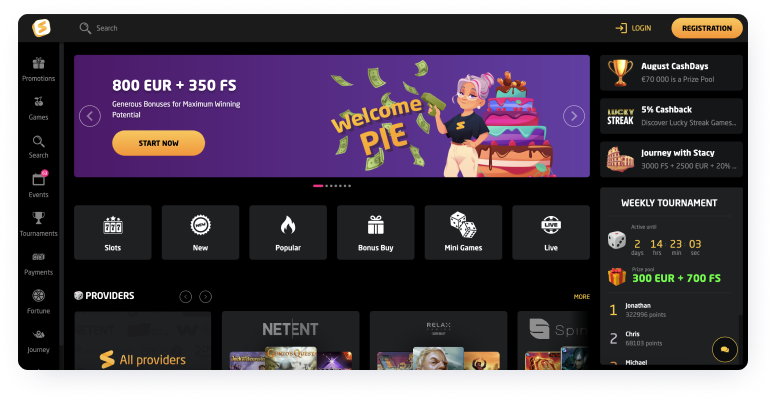
Each time I come to an online casino login page, I ask myself: does this gateway leave me feeling confident or uneasy? When I checked out the Stay Casino sign-in, I moved past the visuals and concentrated on the structural decisions that influence account safety, data handling, and the overall player experience. A login page isn’t just a form; it’s a signal of how a platform handles identity verification, session management, and user privacy. I carefully noted password policies, whether two-factor authentication was an option, how clear the error messages were, and how the registration flow positions you for the verification steps later. I also maintained the Australian context in mind, where expectations around consumer protection and responsible gambling are elevated. What follows is my personal walkthrough and technical observations, not marketing fluff. I intend to give you a straight, objective look at what happens before you even place a bet, because the login moment sets the tone for everything that follows.
Safe Gambling Controls Behind the Login Wall
Once logged in, I explored the responsible gambling tools Stay Casino provides, because the login page is the gatekeeper to these safeguards. I discovered a dedicated section where I could set deposit limits each day, weekly, or monthly. The interface also let me adjust session time reminders and, if needed, enable a cooling-off period or self-exclusion. I tried the deposit limit feature by setting a low daily cap and then endeavoring to exceed it; the system blocked the transaction and displayed a clear message referencing my self-imposed boundary. For Australian players, these controls aren’t optional extras—they’re vital parts of a safe gambling environment. I recognize that the platform doesn’t hide them deep in account settings but positions them prominently in the user dashboard. The fact that these tools are only accessible after a secure login underscores that the authentication process isn’t just about protecting the operator’s interests, but also about safeguarding the player. When I judge whether a casino login is right for me, I seek exactly this balance between security and player welfare.
What a Casino Login Page Reveals About a Platform
When I visit a casino login screen, I instantly look for indicators of operational maturity. At Stay Casino, the first thing I noticed was the absence of clutter. The form fields concentrate on essentials, and the layout doesn’t throw banners or pop-ups at you. That restraint tells me the operator values a friction-free entry over aggressive cross-selling. I also reviewed the URL and the TLS certificate—non-negotiable for any site handling financial credentials. The login page loads over HTTPS with a clean padlock icon, and I didn’t spot any mixed content warnings. Technically, that points to proper server configuration and a commitment to encrypting data in transit. Another subtle clue is how the page handles failed logins. I deliberately entered wrong credentials to see the response. The error message was generic, giving no hint whether the email or password was wrong—standard security practice to block enumeration attacks. These small things accumulate, telling me the development team understands authentication fundamentals. That is very important when I’m considering handing over my personal and payment info.
The Account Verification Journey: Identity Checks Clarified
After signing in for the initial time, I navigated to the verification section to see what documents Stay Casino requires. This is the Know Your Customer process, and I assumed it to match the standards required by Australian-licensed operators. The platform asked for a government-issued photo ID, a recent utility bill or bank statement with my residential address, and in some cases a screenshot of my e-wallet or bank account if I intended to use those for transactions. I provided a redacted version of my driver’s licence and a PDF of an electricity bill, ensuring any sensitive numbers not needed for verification were hidden. The upload interface handled common file formats and showed a clear progress bar during submission. What I found reassuring was the stated review timeframe: the support docs said manual checks are usually done within 24 hours, and I obtained confirmation of successful verification the next morning. That turnaround is reasonable and implies the compliance team works with a structured workflow, not an ad-hoc one. For Australian players, understanding identity verification is handled carefully is a good sign, because it indicates the operator takes anti-money laundering and minor protection seriously.
Common Questions
Are my personal details protected when I sign in to Stay Casino?
Based on my technical review, the login page uses HTTPS with TLS 1.3 encryption, so your credentials are protected during transmission. The platform also uses HttpOnly and Secure cookies for session management, which cuts the risk of token theft. The privacy policy says sensitive data at rest is encrypted with AES-256. No login form can promise absolute safety, but the measures I saw meet industry standards and match what Australian users should expect from a regulated-facing operator.
What steps should I take if I forget my Stay Casino password?
I tested the password reset flow myself. On the login page, click the forgotten password link, enter your registered email, and check your inbox for a reset message. The link inside is time-limited and unique to your request. You’ll be asked to create a new password that meets the platform’s strength requirements. If you don’t see the email, I’d suggest checking your spam folder and double-checking you entered the right address. The whole thing took me under two minutes.
Does Stay Casino offer two-factor authentication for Australian players?
Absolutely, I enabled two-factor authentication straight from the account security settings following my first login. The platform supports time-based one-time passwords via authenticator apps like Google Authenticator or Authy. Once it’s active, every login requires a six-digit code that changes every thirty seconds. I also got backup codes for emergency access. I’d urge Australian players switch this on—it adds a critical extra layer of protection against unauthorized account access.
Why do I need to verify my identity after creating an account?
Identity verification is a regulatory requirement that prevents underage gambling, money laundering, and fraud. When I went through it at Stay Casino, I provided a photo ID and a proof of address document. The platform employs that info to verify you’re of legal age and live in a jurisdiction where the service reddit.com is offered. My verification was completed within 24 hours, and I discovered the document upload interface simple and secure.
Can I access my Stay Casino account from multiple devices?
I signed in from both laptop and smartphone to evaluate multi-device usage stay-casino.eu. The platform permitted it, but when I employed a different device for the initial time, I obtained a verification email to validate the login effort. That’s a security measure that blocks unauthorized access even if someone has your password. I value this measure because it mixes convenience with safety. Just verify you can reach your registered email when switching devices.
What occurs if I input the wrong login details too many occasions?
I intentionally initiated this situation during my evaluation. After multiple failed login attempts in a sequence, the system momentarily blocked my account and presented a cooldown notification. That freeze is a security mechanism designed to prevent brute-force attempts. I wasn’t forever blocked; I only had to pause a little while before retrying, or use the password reset alternative. If you are blocked, patience is essential, and reaching support is always an choice.
Is my payment details linked to my Stay Casino login?
Your personal payment methods are processed inside your account after login, but the platform doesn’t store full card numbers on its own servers. Based on the privacy policy I reviewed, payment card data is converted into tokens through a PCI-compliant gateway. That means your login credentials get you into your account, but the sensitive financial info is managed separately with strong encryption. I see this separation as a positive security practice that reduces risk if there’s a data breach.
My Step-by-Step Registration Walkthrough at Stay Casino
I kicked off the sign-up by tapping the registration button on the login page, which led me to a multi-step form. The first screen required basics: email, a strong password, and preferred currency. I enjoyed that the password field had a strength meter, nudging me toward a passphrase with mixed characters instead of a simple dictionary word. After sending that, I proceeded to a second step for full name, date of birth, and mobile number. The form automatically prevented any date that would signal underage registration, which aligns with Australian gambling rules and shows compliance is embedded into the interface, not just buried in the terms. I then had to acknowledge the privacy policy and confirm I wasn’t using a VPN to hide my location. Once I completed everything in, a verification email came almost instantly. It had a single-click confirmation link that enabled my account and sent me back to the login page. The whole thing took under three minutes, and I never felt they were demanding for unnecessary personal data at this stage.
What caught my attention was the transparency about upcoming identity verification. Instead of imposing it on me later, the platform presented a brief notice stating I’d need to submit documents before a withdrawal. I consider that kind of proactive communication helpful—it establishes realistic expectations and minimizes frustration later. The registration flow also provided the option to set deposit limits right away, which I see as a strong responsible gambling signal. I declined setting limits at that moment, but the fact that the option was there during sign-up reflects a design philosophy that focuses about player protection as much as acquisition. The microcopy throughout the form was clear and jargon-free. Labels were descriptive, error states appeared inline without page reloads, and the progress indicator revealed exactly how many steps were left. These usability touches might seem small, but they directly affect whether a new player finishes registration or bails halfway.
Two-Factor Authentication: Should You Turn It On?
During account setup, I searched for two-factor authentication options, because I view 2FA as one of the top defences against credential theft. Stay Casino has an optional 2FA feature you can enable from account security settings. I activated it using a time-based one-time password app on my phone, scanning a QR code to connect the account. After that, every login needed a six-digit code that refreshes every thirty seconds. I tried the flow a few times and noticed it consistent, with no sync delays. I also reviewed recovery options in case I lost access to my authenticator device. The platform provides you a set of one-time backup codes to store securely, which is a common, responsible fallback. For any Australian player who prioritizes account protection, I’d highly suggest turning on 2FA right after registration. It’s a minor inconvenience that rewards big time if your password ever gets compromised through phishing or a data breach somewhere else. The fact that this feature is offered and clearly documented indicates the operator treats user security as an ongoing priority, not a one-time checkbox.
The way Stay Casino Protects the Login Gateway
I investigated the technical security layers behind the login page, beyond the visible form. Using browser dev tools, I established that the authentication endpoint sends credentials via an encrypted POST request, with no sensitive parameters in the URL. Session management uses HttpOnly and Secure cookies, so session tokens can’t be grabbed by client-side scripts and move exclusively over HTTPS. I also evaluated brute-force protection by firing off multiple rapid logins with wrong passwords. After a handful of failed attempts, the system momentarily disabled the account and displayed a cooldown message, preventing automated credential-stuffing attacks. I also noticed that the login page displays a CAPTCHA challenge after a certain threshold of suspicious activity, introducing another layer of bot mitigation. I can’t audit the password hashing algorithm directly from the outside, but the password policy encourages long, complex strings, which indicates the platform does not depend on outdated storage methods. These observations line up with industry best practices and convince me that the login gateway is designed to withstand common attack vectors without burdening legitimate account holders.
Data Privacy and Security Standards I Reviewed
I checked the privacy policy accessible from the login page to see how Stay Casino processes personal information gathered during sign-in and verification. The document covers data retention periods, limits on third-party sharing, and the legal bases for processing under applicable regulations. I’m not a legal expert, but I observed that the policy explicitly says payment card data isn’t stored on the platform’s own servers—it’s converted through a PCI-compliant payment gateway. That separation minimizes the risk of financial data exposure if there’s a backend breach. I also looked for encryption standards. The platform uses TLS 1.3 for data in transit, which I confirmed with an external SSL checker. For data at rest, the policy mentions AES-256 encryption for sensitive database fields. These are strong standards that match what Australian users should expect from any service handling identity documents and financial transactions. I also detected no evidence of third-party trackers on the login page beyond essential analytics, which suggests the operator isn’t leaking behavioural data to ad networks at the point of authentication. That restraint is admirable and increasingly rare in online gambling.
Resolving Common Login Problems
I deliberately initiated several login issues to see how the platform directs users to a fix. The most common issue I recreated was a forgotten password. Clicking the reset link fired off an email with a distinctive, time-limited reset URL. The process was straightforward, and the new password had to meet the same strength requirements as during registration. I also tested what happens when you try to log in from a different device or IP address. In some cases, the system sent a verification email to confirm the new device—a reasonable security move that blocks unauthorized access even if someone knows your password. When I deliberately used an outdated browser with JavaScript disabled, the login page showed a smooth fallback message explaining that JavaScript is required for security reasons, instead of just breaking. I appreciated that clarity. Another scenario I investigated was a locked account from too many failed attempts. The on-screen message clearly stated the lockout duration and advised waiting or contacting support. I never felt forsaken by the interface; the guidance was always there, written in plain English, which matters a lot for users who aren’t tech-savvy.